
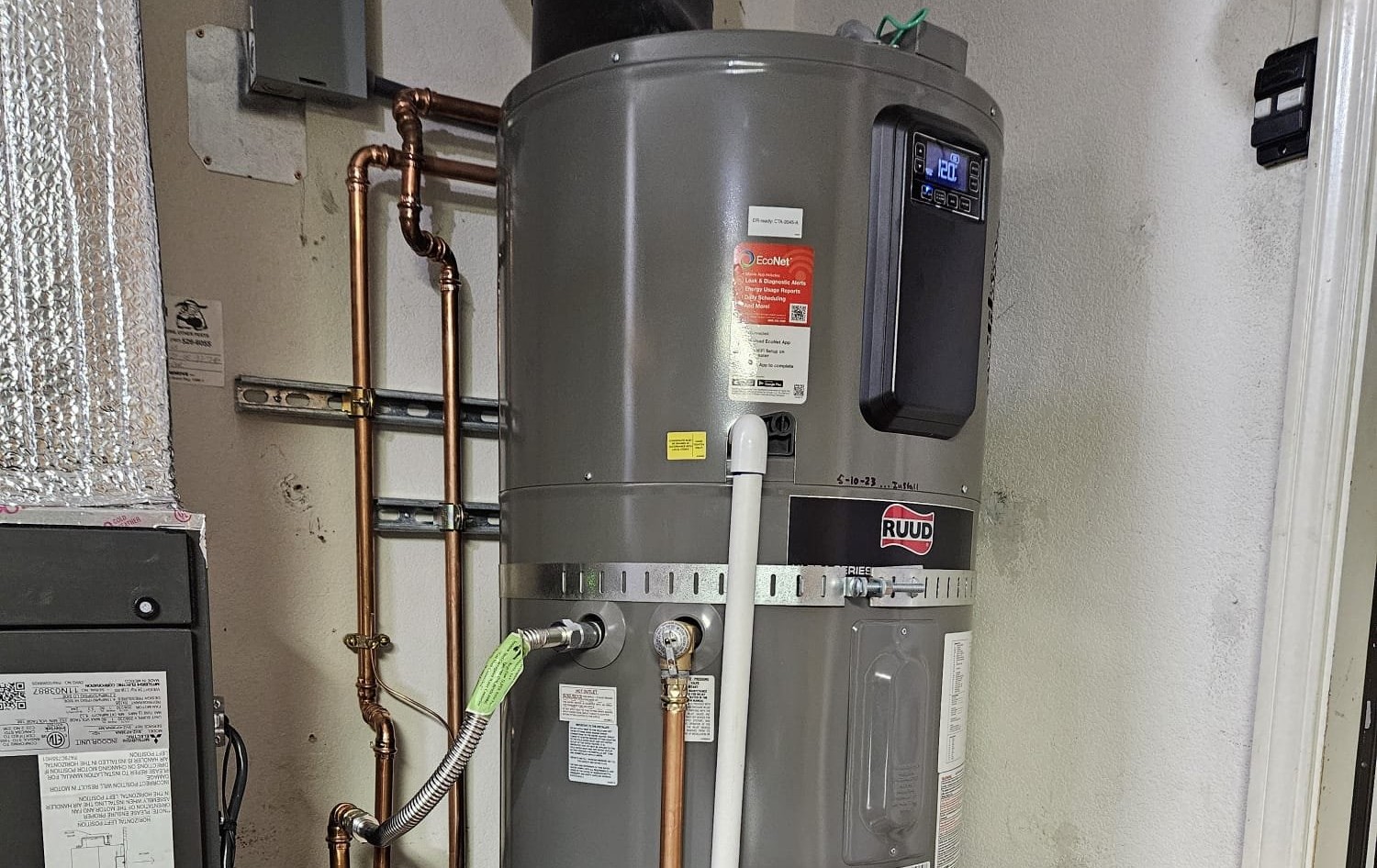
Cold mornings happen when tired water heaters finally quit. If yours gives out this winter, you probably have one question first: can I still put in a gas heater? After the Air District vote on November 4, the answer for water heater replacement in the Bay Area is yes, for now. Our water heater team has been fielding that question in every office since the vote.
The Bay Area Air District pushed its zero-NOx water heater deadline from January 2027 to January 2028. It also added exemptions for low-income owners and for homes where electrical or space limits make the switch hard. Nothing changes for a heater that still works. Despite the headlines, there is no gas water heater ban on appliances already in your home.
This guide explains what the vote changed and what the widely reported gas water heater ban really requires. It also helps you choose between gas and a heat pump water heater. Finally, it covers rebates and the panel and space checks worth doing before your old tank fails.
What NOx Is and How to Tell If You Have a Gas Water Heater
NOx stands for nitrogen oxides, gases that form when natural gas burns at high heat. Outdoors, they help create smog and fine particle pollution. The Air District links gas water heaters and furnaces to as many as 85 premature deaths and 15,000 asthma attacks a year in the Bay Area. That is why Rule 9-6 targets these appliances.
Not sure which type you have? Look for these signs on your heater:
- A metal vent pipe rising from the top of the tank
- A gas supply line with a shutoff valve near the bottom
- A small access panel at the base, often with a pilot light or burner behind it
- A label that lists natural gas and an input rating in BTUs
An electric tank has no vent pipe and connects to a heavy electrical cable instead. While you check the label, note the tank size too, since units of 30 gallons or less are excluded from the zero-NOx rule. Knowing your heater type is the first step in planning water heater replacement in the Bay Area.
What the November 4 Vote Changed
Rule 9-6 has limited NOx emissions from gas water heaters since 1992. In 2023, the Air District set a zero-NOx water heater standard for residential units, starting in 2027. The November 4 amendments moved that start date to January 1, 2028. For anyone planning water heater replacement in the Bay Area, that adds a full year of choice.
The New Exemptions
The Board added three exemption groups. Low-income owners qualify if they earn under 80 percent of Area Median Income or take part in programs such as Medi-Cal or CalFresh. Owners who spend more than 28 percent of income on mortgage and property taxes also qualify. In effect, these owners are exempt from the gas water heater ban.
The other two groups cover homes that can’t easily take a zero-NOx water heater. One is properties without enough room or ventilation for a compliant unit. The other covers electrical limits, such as panels under 100 amps or new wiring runs over 50 feet. If your home fits one of these groups, gas stays an option for water heater replacement in the Bay Area after 2028.
What Stays the Same
Water heaters of 30 gallons or less and mobile home water heaters still don’t need to be a zero-NOx water heater. Temporary installations are allowed in emergencies. Multifamily buildings and deed-restricted affordable housing have until 2033. Furnace rules under Rule 9-4 did not change in this vote.
Is There Really a Gas Water Heater Ban?
Not in the way most headlines suggest. The gas water heater ban is really a point-of-replacement standard. The Air District says the rule “does not require any household to remove a working appliance.”
Even under the gas water heater ban, your current gas tank can stay until it fails. The rule applies only to water heater replacement in the Bay Area starting January 1, 2028. At that point, a new unit must be a zero-NOx water heater, which in practice usually means a heat pump water heater.
It also doesn’t touch gas stoves, dryers, or fireplaces. So when friends talk about a gas water heater ban, the accurate version is narrower. New installs must be zero-NOx starting in 2028, unless an exemption applies.
Your Options If Your Heater Fails This Winter
Winter is the busiest season for water heater replacement in the Bay Area. Colder incoming water makes an old tank work harder, and weak burners or worn anodes give out under the load. If yours fails between now and the end of 2027, you have a real choice.
Option 1: Replace Gas With Gas
A like-for-like gas replacement is still allowed through 2027, because the gas water heater ban doesn’t start until 2028. It is usually the fastest and lowest-cost fix, since the gas line, venting, and space already exist. A new gas tank typically lasts 8 to 12 years, so it carries you well past the 2028 date.
The trade-off is timing. Your next water heater replacement will likely require a zero-NOx water heater. If you already plan an electrical upgrade or remodel, switching now may cost less than switching it later.
Option 2: Switch to a Heat Pump Water Heater
A heat pump water heater pulls heat from the surrounding air instead of burning gas. Energy Star rates heat pump water heaters as far more efficient than standard electric tanks. In the Bay Area’s mild climate, they work well year-round in most garages. It is the most common zero-NOx water heater for local homes.
Upfront cost is higher, but rebates narrow the gap. Many owners pick a heat pump unit now to avoid a second, rushed replacement later. If you’re unsure, one of our plumbers can price both options side by side.
Option 3: Repair and Wait
Sometimes the problem is a thermocouple, a gas valve, or a stuck relief valve, not the tank itself. If the tank is under about eight years old and not leaking, repair can buy time. Our Bay Area water heater repair guide explains when repair makes sense. Repair is often the cheapest bridge to your next water heater replacement in the Bay Area.
What a Heat Pump Water Heater Needs
A heat pump water heater isn’t a simple swap for every home. Checking these three things now helps you plan your water heater replacement in the Bay Area before a failure forces a fast decision.
Electrical Capacity
Most full-size units need a dedicated 240-volt circuit, though some newer models plug into a standard 120-volt outlet. Older homes in San Francisco’s Sunset, Willow Glen in San Jose, or central San Rafael often have 100-amp panels. Those panels may need an upgrade or a load-management device before a zero-NOx water heater goes in. Under the new rules, a panel below 100 amps can also qualify a home for an exemption.
Space and Airflow
A zero-NOx water heater that uses heat pump technology needs room to breathe. Most models need a fair amount of open air around them, or ducting to bring air in and out. A closet installed in an Eichler home or a tight Peninsula utility room may not work without changes. That is exactly the kind of space limit the new exemption covers.
Drainage and Noise
Heat pump units produce condensate, so they need a drain nearby. They also run a small fan and compressor, about as loud as a refrigerator. A garage location in most Marin, Sonoma, and South Bay homes handles both easily. That makes the garage the simplest spot for this kind of upgrade.
Rebates for a Zero-NOx Water Heater
Incentives make a heat pump water heater replacement in the Bay Area far more affordable than it looks on paper. MCE, Marin’s local energy provider, offers heat pump water heater incentives through participating contractors. TECH Clean California offers rebates through enrolled contractors, with higher amounts for income-qualified households.
Some cities and local energy providers add their own programs on top. Amounts and funding change often, so check current offers before you buy. The Air District’s Building Appliances page links to the latest incentive resources.
Ask your plumber to confirm which rebates apply to your water heater replacement in the Bay Area. Stacked incentives can bring a heat pump water heater close to the price of a new gas tank.
How to Plan Before 2028
The delayed gas water heater ban gives homeowners a full year of breathing room. Here is how to prepare for your next water heater replacement in the Bay Area.
- Check the age on your water heater’s label. Tanks over 10 years old are near the end.
- Look at your electrical panel’s amp rating, usually printed on the main breaker.
- Measure the space around your heater and note how far it is from the panel.
- Flush the tank once a year to extend its life. Our guide on how to flush your water heater walks through it.
- Get a quote for both a gas and a zero-NOx water heater, so you’re ready either way.
If your heater is already showing warning signs, our post on water heater replacement in San Francisco lists the seven to watch for. North Bay readers can see why water heater replacement in Santa Rosa brings extra local complexity.
How We Handle Water Heater Replacement in the Bay Area
Every job starts with a look at your current setup, panel, and space. We also install every zero-NOx water heater to code, with permits handled. We explain whether gas, a heat pump water heater, or a repair fits your home and budget. You see the price before any work begins.
We handle the install the same day in most cases. If you qualify for a rebate, we help you understand the paperwork, and we stand behind our punctuality promises.
Areas We Serve Across the Bay Area
We handle water heater replacement in the Bay Area from three local offices. Our North Bay team covers Novato, San Rafael, Mill Valley, Santa Rosa, Petaluma, Sonoma, and Napa.
Our South Bay team serves San Jose, from Willow Glen and Cambrian Park to Berryessa and Evergreen. Our Peninsula team covers San Mateo, Burlingame, San Bruno, Redwood City, and San Francisco. Peninsula readers can also see our guide to water heater repair in San Mateo.
Frequently Asked Questions About Water Heater Replacement in the Bay Area
1. Can I still install a gas water heater in the Bay Area?
Yes. After the November 4, 2026 vote, gas units remained an option for water heater replacement in the Bay Area through December 31, 2027. Starting January 1, 2028, a new residential unit must be a zero-NOx water heater unless an exemption applies.
2. Do I have to replace my working gas water heater?
No. The rule applies only when a water heater is replaced. The Air District says it does not require any household to remove a working appliance.
3. Who qualifies for an exemption from Rule 9-6?
Low-income owners qualify, including those under 80 percent of Area Median Income or enrolled in Medi-Cal or CalFresh. Homes without room or ventilation for a compliant unit also qualify. So do homes with electrical limits, such as panels under 100 amps.
4. Is the gas water heater ban the same as a gas ban?
No. The gas water heater ban covers only new residential water heater installations from 2028 on. It does not affect gas stoves, dryers, fireplaces, or any working appliance already in your home.
5. Will a heat pump water heater work in a Bay Area garage?
In most cases, yes. The region’s mild winters suit heat pump units, and garages usually have the airflow and drain access they need. A plumber should confirm space, power, and drainage before any water heater replacement in the Bay Area.
6. Are there rebates for a zero-NOx water heater?
Yes. TECH Clean California and local providers such as MCE offer incentives for heat pump water heaters, and some cities add their own. Amounts change often, so confirm current offers before you buy.
Plan Your Water Heater Replacement in the Bay Area Today
The gas water heater ban gives you until 2028, but your water heater sets its own schedule. Planning your water heater replacement in the Bay Area now means an informed choice instead of a rushed one on a cold morning. Our licensed plumbers will check your heater, panel, and space, then price gas and heat pump options side by side.
Call our North Bay office at 415-992-6125, our South Bay office at 408-645-7519, or our Peninsula office at 415-506-0400. You can also schedule service online. We serve the Bay Area 7 days a week.